I often find myself watching how a dinner comes to an end. The table is finally cleared, the plates have given way to conversation, someone gets up, while someone else stays behind a little longer. Then comes the moment for a small glass.

It is small. Sometimes so small it almost seems out of scale compared to everything we ate and drank before. Yet no one expects it to be any different. I have wondered more than once why the end of a meal settled on this exact size. Why not a larger glass, like the one for wine? Why just a few sips, when throughout dinner we drank for much longer? Perhaps because, at the end of a meal, we no longer need quantity. We need intensity.

When the scale shifts

During a meal, the glass accompanies the food. Wine arrives alongside the dishes, follows every bite, and changes with each course. Its place at the table feels almost natural.

Then something changes. The food is finished, and the way we drink narrows too. There is no longer a course to pair with, nor a moment during dinner to fill. All that remains is one final gesture—brief and precise.

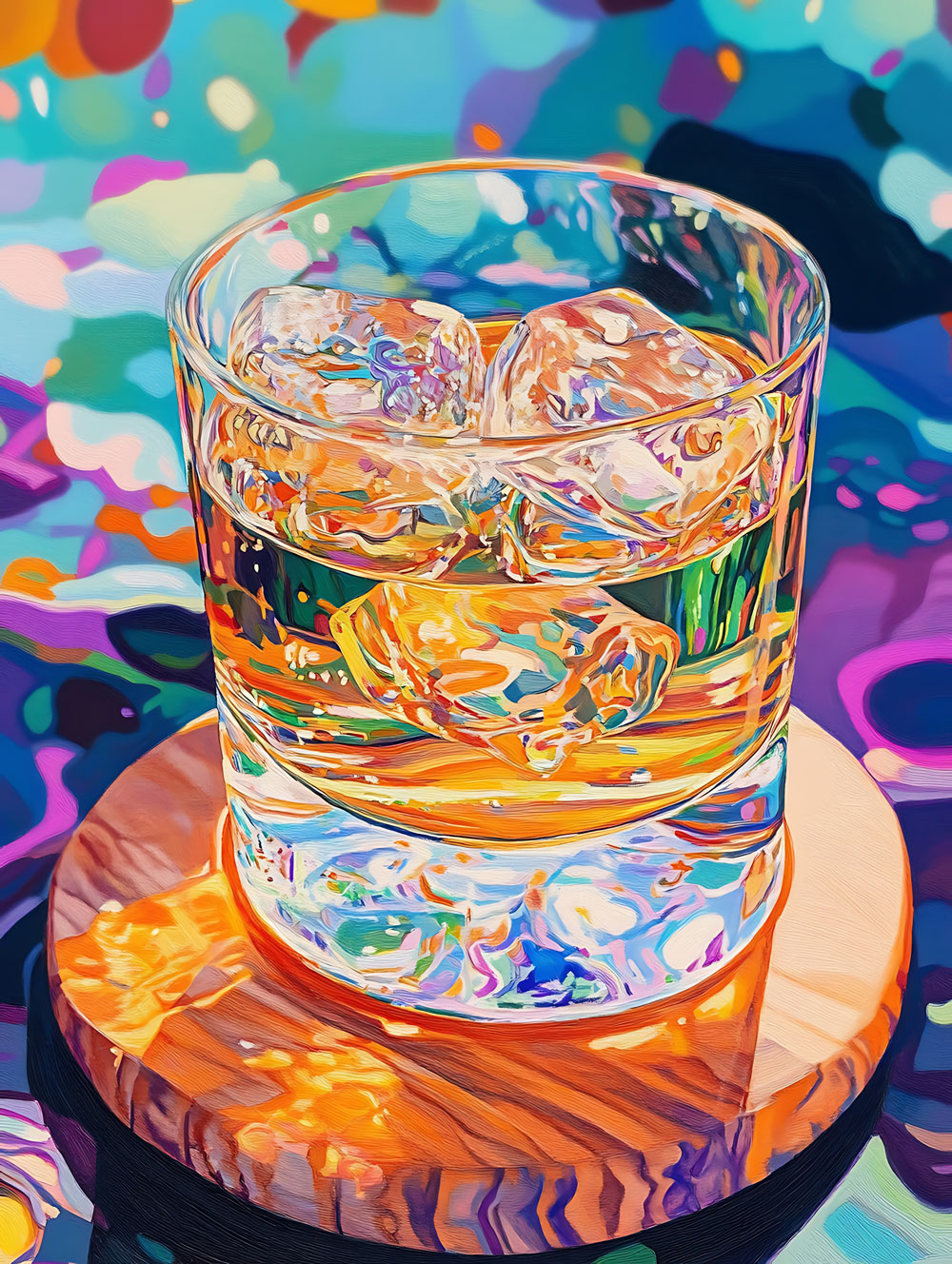
This is where the small glass takes on meaning. A liqueur, a spirit, or an amaro does not need to be consumed in large amounts to leave an impression. On the contrary, a few sips are enough to pause on an aroma, a sensation, an aromatic note that lingers far longer than the liquid in the glass. In this sense, the small quantity is not a compromise. It is a choice.

Small does not mean little

Perhaps this is the most interesting thing about the small glass: it teaches us that quantity and intensity are not the same thing. We are used to thinking that something important must be generous. A bountiful table, a full glass, a portion that leaves no room for doubt.

The end of the meal follows a different logic instead. The small glass holds little, yet that little bit is observed, swirled, smelled, and tasted with a certain care. Even the gesture itself changes: you do not drink distractedly, nor do you necessarily pair it with a bite of food. You take the glass, sip, and often pause. It is a portion that invites slowness precisely because it is meant to last.

Small size turned into a ritual

There is also something cultural about the way that small amount is offered. The small glass is not merely a smaller container. Over time, it has become a signal: dinner is over, yet it is not quite time for everyone to get up. That small sip arrives to separate two distinct moments.

On one side lies the table—with its dishes, its glasses, and the rhythm of the meal. On the other lies whatever follows: a conversation that lingers, a coffee, an armchair, perhaps a story shared with a bit more calm. And right in between sits that very glass.

Its size already communicates something before you even taste its contents. It says that abundance is unnecessary. That this is a concluding gesture, meant to be savored without rush. Perhaps that is why the small glass holds a unique kind of elegance. It does not try to take up space. It refinedly shrinks it.

The strength of the small glass

In the end, the end of the meal tells us something we have easily forgotten: not everything that matters has to be large. A small glass holds little, yet it can preserve an aroma, a tradition, a territory, the craft behind a bottle, and above all, a gesture passed down through generations.

Its size has become part of the ritual. Perhaps the next time that small glass is offered to us, we might look at it with a different kind of attention. Not asking ourselves if it is enough, but wondering why, right at the end of a dinner, we chose that less was the right measure.