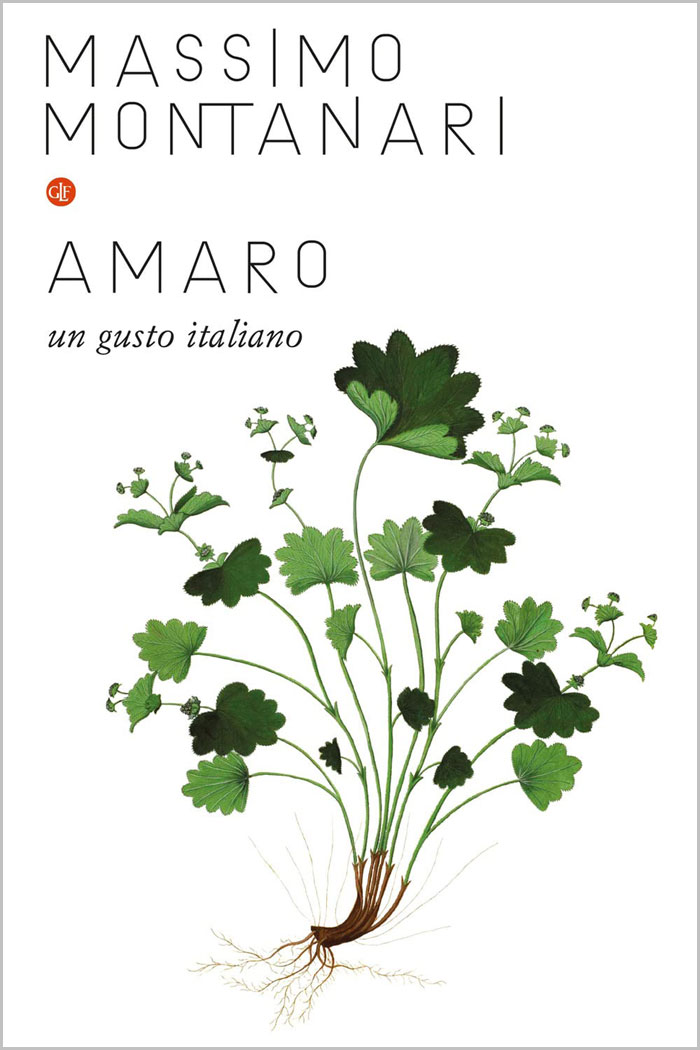
There are books that talk about bitterness. And then there are books that explain why we like bitterness. Amaro. An Italian Taste by Massimo Montanari clearly belongs to the second category.

One of the most authoritative food historians in Italy, Montanari does not limit himself to recounting the birth of digestif liqueurs or monastic recipes: he constructs a true cultural biography of bitterness, investigating how and why the taste of bitterness has conquered a privileged place in the Italian end-of-meal ritual.

Bitterness: from flaw to sign of maturity

For lovers of amari, this is precisely the book’s central point: bitterness is not an immediate taste; it is not as seductive as sweetness nor as reassuring as saltiness. It is an “adult” taste, one that requires education, experience, and memory. Montanari takes us on a journey that begins in antiquity—when bitterness was associated with medicine and purification—and continues through the tradition of convent elixirs to the birth of modern amari as a symbol of Italian identity. From this perspective, the end of the meal is not merely a digestive moment: it is a social ritual, a concluding gesture that seals conviviality and conversation. Those who love amaro know well that it is not just about drinking a liqueur: it is a pause, a slowing down, a final signature to the dinner.

A book for those who drink (and reflect on) amaro

The strength of the volume lies in connecting:

  • gastronomic culture
  • anthropology of taste
  • social history
  • convivial rituality

Do not expect a tasting manual or a guide to the best Italian amari: here we are talking about ideas, symbols, and the cultural construction of taste. It is a book that enriches the experience of those who already love to sip an important amaro after dinner—perhaps meditative, perhaps herbal, alpine, or citrusy and resinous.

After reading these pages, every small glass will carry a different weight: it will be the result of centuries of evolution in the Western palate.

Why read it if you love amari?

Because it helps you understand:

  • Why bitterness “closes” the meal better than sweetness
  • Why bitter taste is associated with depth and maturity
  • Why Italy has become the homeland of amari
  • Why the end of the meal is an identity ritual and not just a digestive matter

At a historical moment in which mixology and the revival of traditions are bringing amari back to center stage, this book provides the cultural roots of a phenomenon that many experience only on a sensory level.

In conclusion

Amaro. An Italian Taste is a short but dense read, perfect for those who consider amaro not a simple digestif, but a cultural act.

It is the ideal book to read with a glass at your side. Perhaps slowly. Perhaps letting that bitterness—so stubbornly Italian—tell its story all the way through.