From ancient apothecaries to monasteries: the history of amari between medicinal herbs and recipes passed down through the centuries

Before choosing a new amaro to offer on Finepasto, I like to understand where that recipe comes from. Who created it? Why those specific herbs? Is there a tradition behind it, or is it a more recent idea? These are questions that come naturally to me, because I believe a product isn't made only of ingredients. There is always a story accompanying it.

With amari, something peculiar happened. I thought I knew them well enough. I had always associated them with the end of a meal, with that glass served after a dinner with friends or a family lunch. Then, reading about their origin, I realized that for centuries they weren't considered simply liqueurs. The more I read, the more I realized I had taken for granted something I actually knew very little about.

When apothecaries prepared remedies, not liqueurs

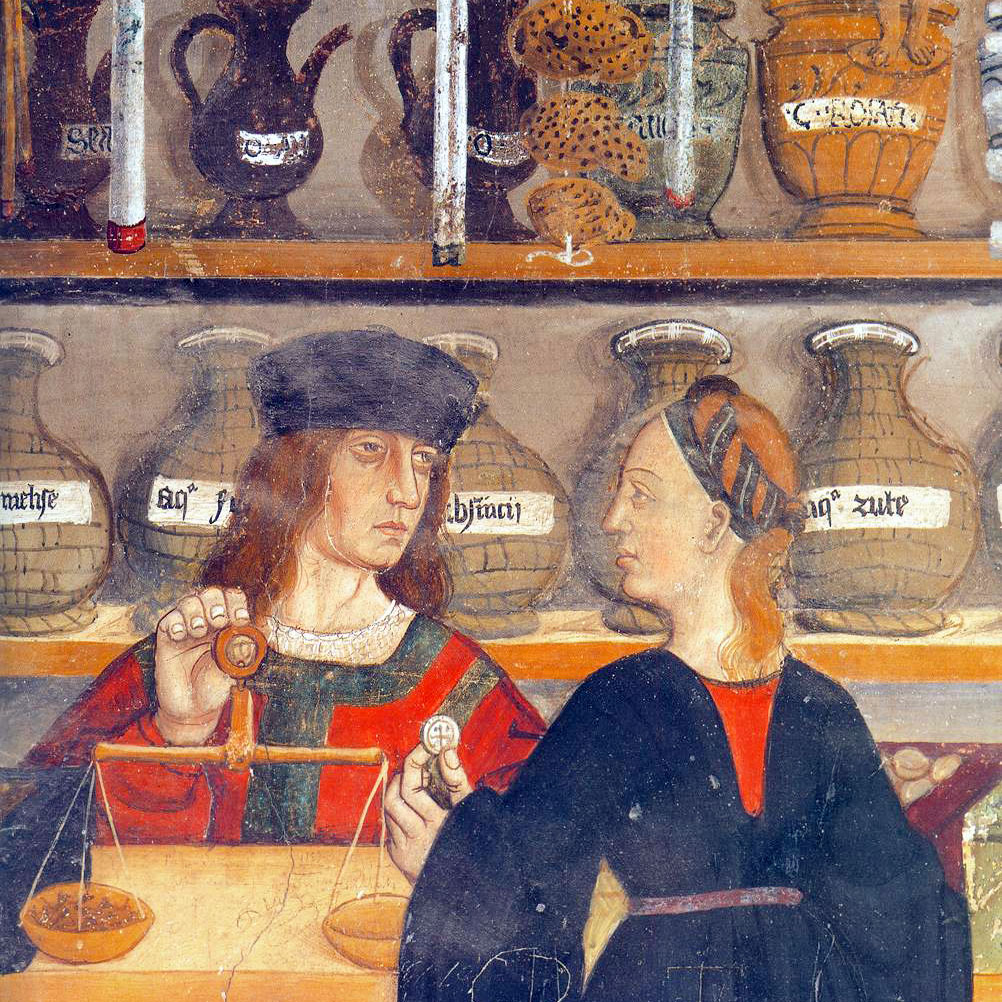
If we want to buy a bitter today, we step into a wine shop or a specialty store. Centuries ago, everything was entirely different. Anyone looking for a herbal preparation turned to the apothecary—a figure who combined practical knowledge, experience, and a deep familiarity with medicinal plants.

I like imagining those shops. Shelves lined with terracotta and glass jars, bundles of herbs left to dry, and neatly arranged roots, barks, berries, and seeds. Every ingredient had its place, and every preparation required time, patience, and precision. Alcohol was not used to create a liqueur in the modern sense. Its main purpose was to preserve the mixtures and extract the aromas and compounds of the botanicals.

According to the medical knowledge of the time, many of these preparations were consumed as digestifs after heavy meals and as remedies to ease minor daily ailments. It was the wisdom of that era, built on observation and experience, and vastly different from modern medicine. Today we know that scientific research follows completely different criteria and that not all properties attributed to plants back then are confirmed. Yet, it remains fascinating to think that the very bitters we still enjoy on our tables today originated from those early preparations. I had never realized that a simple gesture like drinking a digestif after dinner carried such a long history.

In monasteries, a precious knowledge was kept

As I continued researching, I discovered that apothecaries were not the only places where these infusions were prepared. Many monasteries also had gardens dedicated to medicinal herbs. The monks observed the seasons, harvested the plants at the most suitable time, dried them, and prepared tinctures, elixirs, and macerations following recipes guarded with great care.

Here too, I found myself imagining the scene. No modern lab, no machinery. Just expert hands, notes passed down over time, and a knowledge of nature built slowly, year after year. Some of those recipes were lost. Others, however, evolved and crossed through the centuries to become the liqueurs we know today. Perhaps that is precisely what makes amari so interesting: inside a bottle, there isn't just a recipe, but a piece of history.

Medicinal herbs: the true protagonists

The more I read, the more I understood that the true protagonists of this story were not only the apothecaries or the monks. It was the herbs.

Each plant was chosen because, according to the knowledge of the time, it possessed very specific characteristics. Gentian was appreciated above all in digestive preparations thanks to its bitter taste. Rhubarb found a place in many infusions, while cinchona, which arrived in Europe from South America, soon became one of the most sought-after botanicals in the herbalist tradition. Alongside these, angelica, wormwood, licorice, juniper, fennel, mint, and citrus peels often appeared. Some gave off intense aromas, others served to balance the bitterness, and still others were chosen for the properties that folk tradition attributed to them.

Of course, today we look at these recipes through the lens of modern medicine. But that takes nothing away from the historical value of that knowledge. In fact, that is precisely what struck me the most. Many of the botanicals we find in today's amari are the very same ones that filled the shelves of apothecaries centuries ago. Ever since I realized this, every time I taste an amaro, I instinctively wonder how many people, over time, have contributed to building that recipe.

From traditional remedy to after-dinner liqueur

As the centuries passed, those preparations slowly changed. The recipes were refined, the first distilleries emerged, and amari began to be appreciated not only for their use in herbal tradition, but also for the pleasure of their taste. Botanicals remained the key elements, but the balances shifted.

Citrus fruits, spices, and a touch of sweetness made these liqueurs increasingly harmonious, eventually turning them into the classic after-dinner drink we know today. It is curious to think that millions of people repeat this gesture almost every day without imagining just how ancient its origins really are.

Why I wanted to tell this story

If I hadn't started researching for my work, I probably would have continued to see amari the way many people do: just a good product to drink after dinner. Instead, I found myself reading about apothecaries, monasteries, medicinal gardens, herbs, and recipes guarded for centuries. It's a discovery that has changed the way I look at these products.

That is also why I enjoy writing for the Finepasto blog. Every product I choose gives me the opportunity to learn something new. And when a story manages to surprise me, it feels right to share it.

The next time I have an amaro after dinner, I am sure I will also think of everything that came before: the hands of the apothecaries, the monastery gardens, the aroma of freshly harvested herbs, and that long journey which, century after century, transformed an ancient herbal preparation into one of the most deeply rooted traditions of the Italian table.