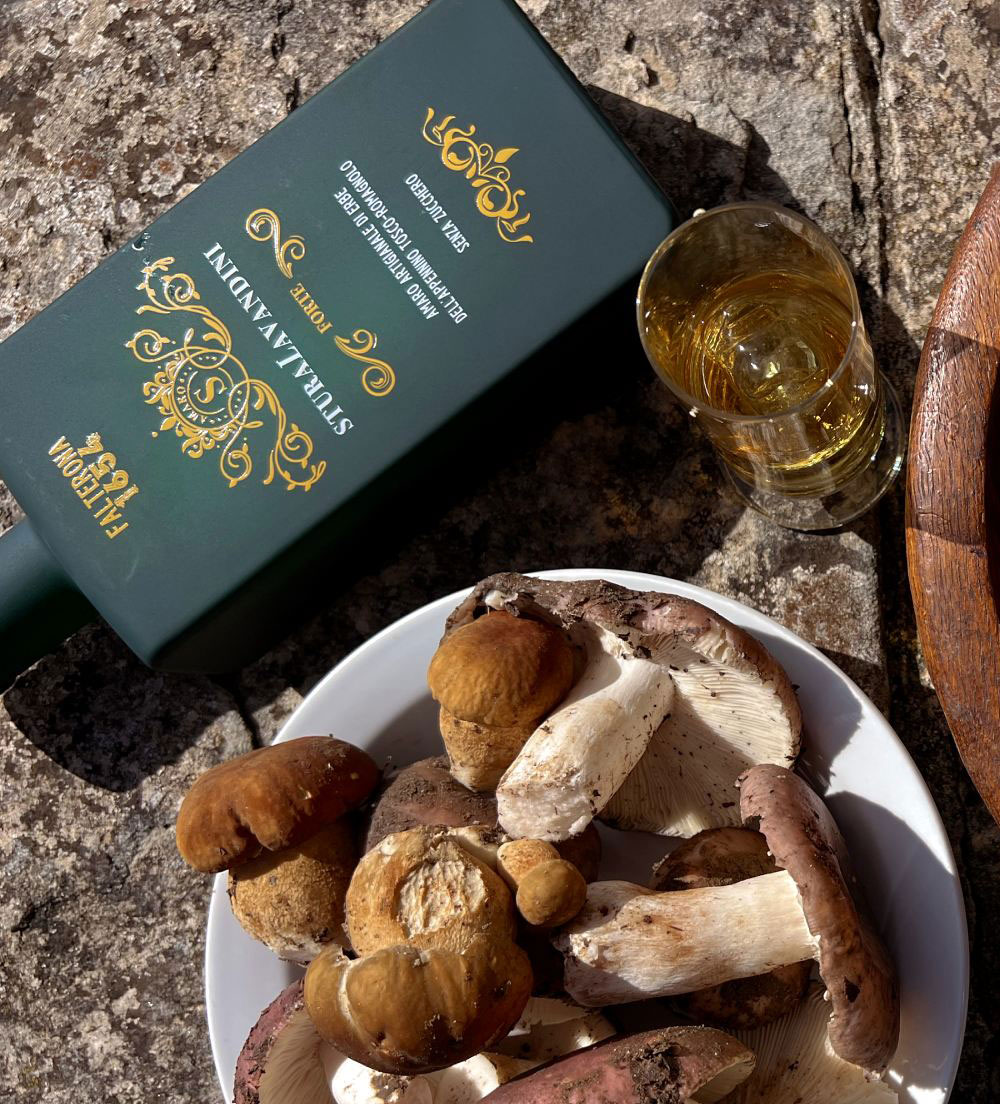
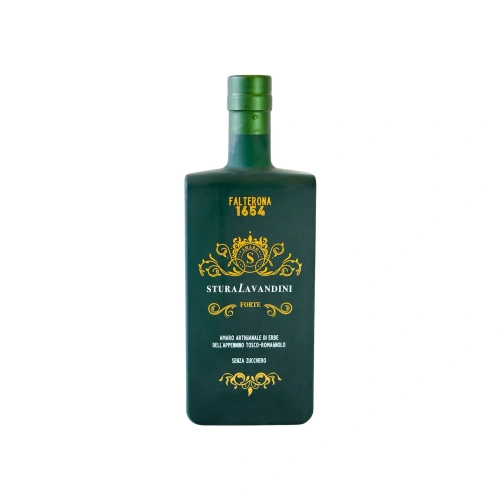
Its character comes directly from the botanicals. Gentian and milk thistle bring the bitter notes; wild juniper from Mount Falterona, along with mint and thyme, adds a fresh, balsamic component. Lemon peel introduces a tart, citrus note, while bay leaf contributes to the herbaceous depth and a long-lasting finish.
I like to think about how much the journey of this recipe has changed: once born in a mountain home through family tradition, today that same story can be contained in a bottle, continuing to speak through the ingredients that compose it. Even the name retains something of that domestic dimension. “Do you want to try my Sturalavandini?” was the phrase used to offer this amaro at the end of a meal. Not a product to showcase, but something personal: my Sturalavandini, my family's.
Perhaps that is precisely where this story becomes interesting. Because behind a bottle we can find a recipe, sure, but also a way of telling the story of a land. The harvested plants, the hands that select them, a family guarding a recipe, and a mountain that, season after season, continues to offer its ingredients.